


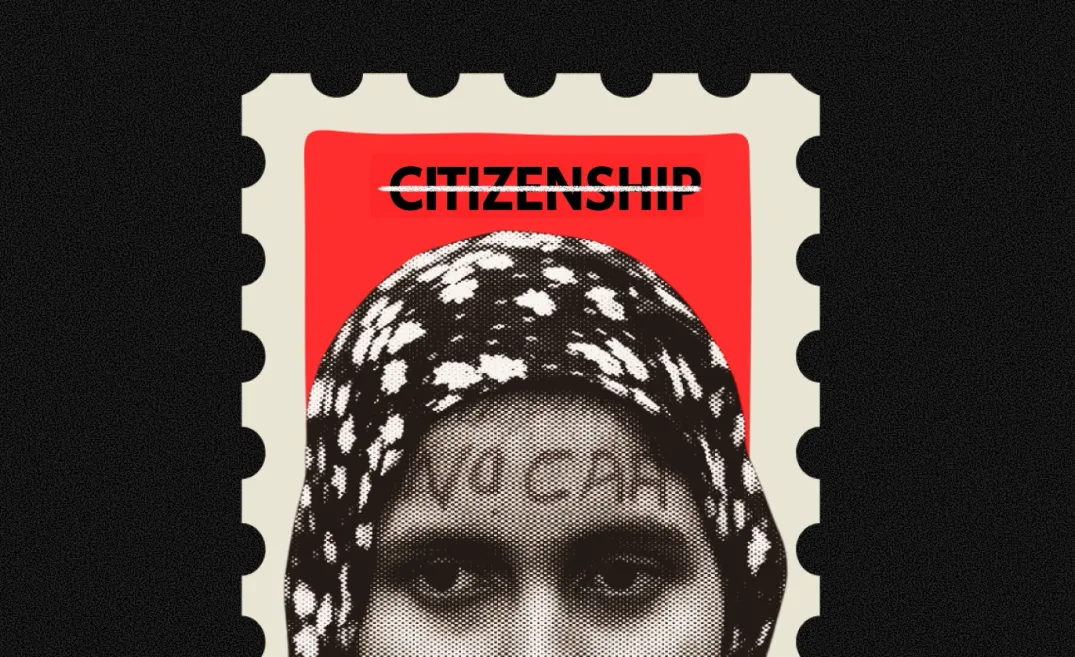
In a waterlogged field on the Panchagarh border, Shamsul Alam sits holding his young son, Abdul Salam. The child is crying from thirst. His father is asking local residents for a bottle of water, offering to pay. They have been there for more than forty hours under open sky no shelter, no food, no clean water. Heavy rain fell through the night; they remained there still.This is not an isolated breakdown in border management. It is the visible human consequence of a policy that West Bengal's Chief Minister Shubhendu Adhikari announced publicly on June 7, 2025: 4,800 people have already been pushed across the border, 836 more are held in detention centres awaiting expulsion, and those not covered by India's Citizenship Amendment Act will be handed directly to the BSF bypassing courts entirely. No trial, no documentation review, straight to the border.
A State Policy, Not a Rogue Operation
The significance of Adhikari's statement cannot be overstated. What civil society organisations described as an alarming pattern of extrajudicial expulsion is now confirmed as deliberate government policy. The West Bengal administration has constructed holding centres in border districts, established a pipeline from detention to BSF handover to expulsion, and in the Chief Minister's own framing identified this as a matter of "national security" and demographic management.Simultaneously, Adhikari announced that approximately 100 kilometres of land along the 556-kilometre unguarded Bangladesh border has been transferred to the BSF for barbed wire construction, with the Siliguri Corridor prioritised. The physical infrastructure of permanent exclusion is being built in parallel with the expulsion operations.
The Architecture of Statelessness
To understand who is being expelled and why, it is necessary to examine what preceded the border operations. Johan Galtung's concept of structural violence holds that harm inflicted through institutional systems denial of rights, erasure of legal standing constitutes a form of violence even in the absence of direct physical force. In West Bengal, this structural process has been underway for some time. India's Election Commission conducted a Special Intensive Revision of electoral rolls that resulted in the removal of approximately nine million voters. An analysis by Al Jazeera found the deletions concentrated in Muslim-majority districts: 460,000 in Murshidabad, 330,000 in North 24 Parganas, 240,000 in Malda. The stated justifications minor spelling discrepancies between identity documents, name changes after marriage create a burden of proof that is individually plausible and collectively revealing in its pattern of application. Nabijan Mondal, 73 years old, has voted in every election for fifty years. Her husband, sons, and daughter remain on the roll. She was removed because her voter card reads "Nabijan" while her Aadhaar card reads "Nabirul." The tribunal process for correction is too slow to function before any election. Under the logic now operating in West Bengal, that administrative gap makes her a candidate for a holding centre.
The Framework of Ethnic Cleansing
The International Criminal Tribunal for the former Yugoslavia defined ethnic cleansing as rendering an area ethnically homogeneous by using force or intimidation to remove persons of given groups. The definition encompasses not only direct physical violence but also administrative coercion, systematic denial of legal status, and the creation of conditions under which a population cannot remain. The current sequence in West Bengal maps closely onto this framework.
The steps are now fully documented: electoral disenfranchisement weakens a community's claim to state recognition; documentary requirements rendered practically unsatisfiable produce a class of persons who cannot prove citizenship; detention in holding centres follows; BSF handover bypassing judicial oversight comes next; expulsion across an international border is the final stage. APDR has described this as a three-D policy of detection, deportation, and erasure of identity and has noted it contradicts the fundamental rights provisions of India's own constitution.
On Genocidal Intent: A Careful Assessment
Raphael Lemkin understood genocide not as a single catastrophic act but as a coordinated process aimed at destroying the essential foundations of a group's existence. Article II(c) of the UN Genocide Convention includes within its definition the deliberate infliction of conditions of life calculated to bring about a group's physical destruction in whole or in part. Genocidal intent in the legal sense requires dolus specialis the specific intent to destroy a group as such. That threshold has not been met, nor formally alleged, in the present situation. What is documented is a pattern: disenfranchisement, administrative statelessness, detention without judicial process, and forced physical displacement, applied along religious lines, at scale, and now publicly confirmed as state policy. Scholars working in mass atrocity prevention have consistently identified this sequence as an early-stage indicator of processes that have historically preceded mass violence. The Rohingya in Myanmar passed through nearly identical preliminary stages. International attention arrived after the fact.
International Law and the Obligation to Respond
Bangladesh's Border Guard has correctly refused the push-ins, demanding that India follow established bilateral protocols and use designated Immigration Check Posts.The principle of non-refoulement under the 1951 Refugee Convention prohibits the return of any person to a territory where they face serious risk to life or freedom, regardless of nationality or documentation status. Families pushed at gunpoint, at night, bypassing every judicial mechanism, constitutes a clear violation of this principle. Bangladesh must escalate beyond bilateral diplomacy. Formal communication to the UN Human Rights Council, UNHCR, and relevant treaty bodies is necessary. With 4,800 already expelled, 836 in detention, and nine million potentially at risk of statelessness, the conditions for a large-scale regional humanitarian crisis are being actively constructed. The time for preventive international engagement is now, not after the zero line becomes something worse.