

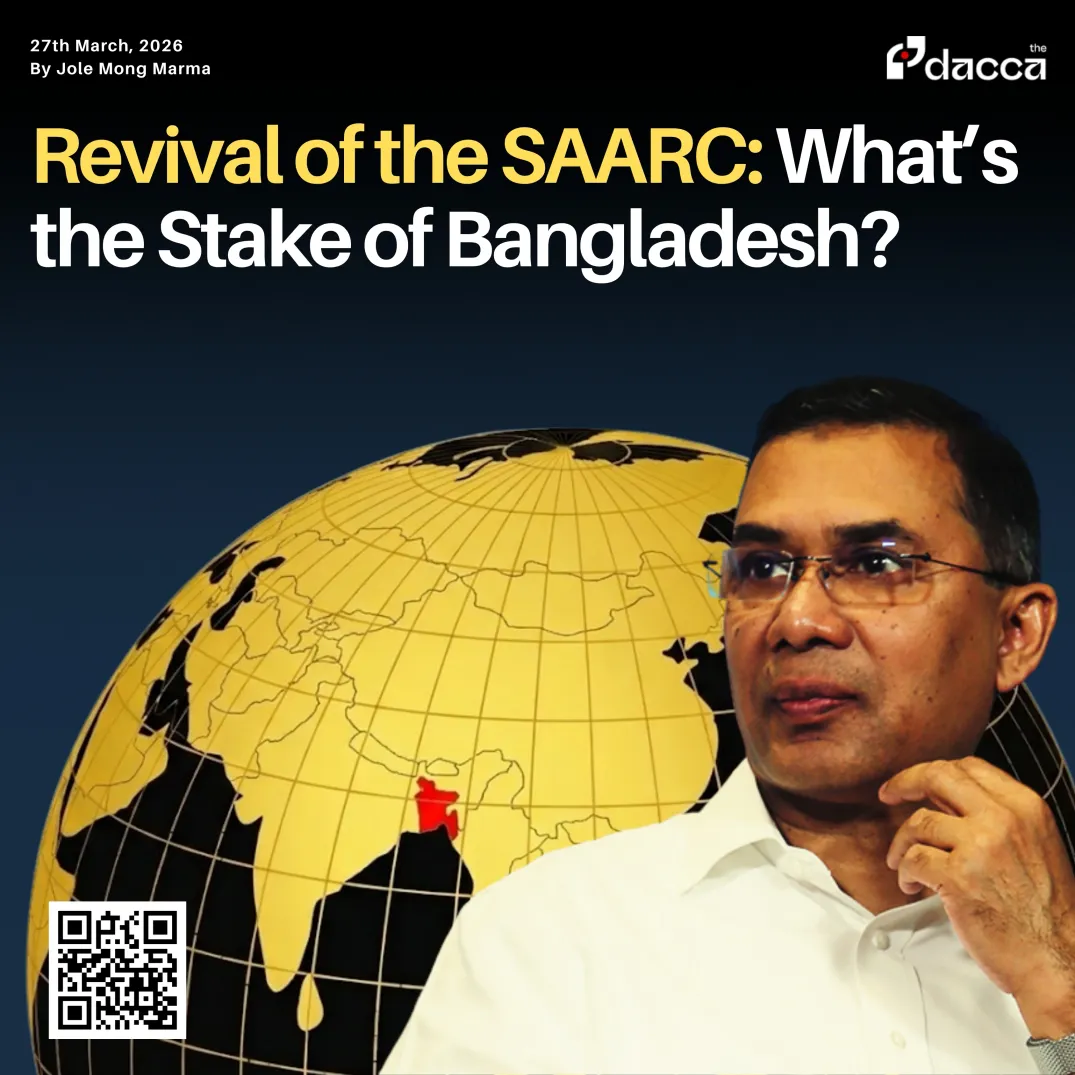
“Bangladesh was the initiator of SAARC. So naturally, we would want SAARC to be revived,” Tarique Rahman, current prime minister of Bangladesh and son of SAARC's founder late Ziaur Rahman, said this at his first post-election press conference at the InterContinental Hotel in Dhaka, adding that “The BNP will take initiatives in this regard after forming the government. The government [then] speaks to neighbouring countries on the issue.” Since then, the topic of the revival of SAARC is discussed widely.
SAARC(South Asian Association for Regional Cooperation) is an intergovernmental organisation established in 1985 to promote economic growth, social progress and cultural development among its eight member states- Bangladesh, India, Pakistan, Afghanistan, Nepal, Bhutan, Maldives and Sri-lank. But it has been non-functional since 2014 primarily due to severe tensions between India and Pakistan. The 2016 Uri terror attack, allegedly sponsored by Pakistan killed 17 Indian soldiers which prompted India as well as other countries including Bangladesh to boycott the SAARC summit, leading to a complete halt in meetings.
Recently, about the revival of the SAARC has been talked so much, especially Bangladesh is very interested to revive the SAARC as it was first initiated by Bangladesh.
What’s the stake of Bangladesh?
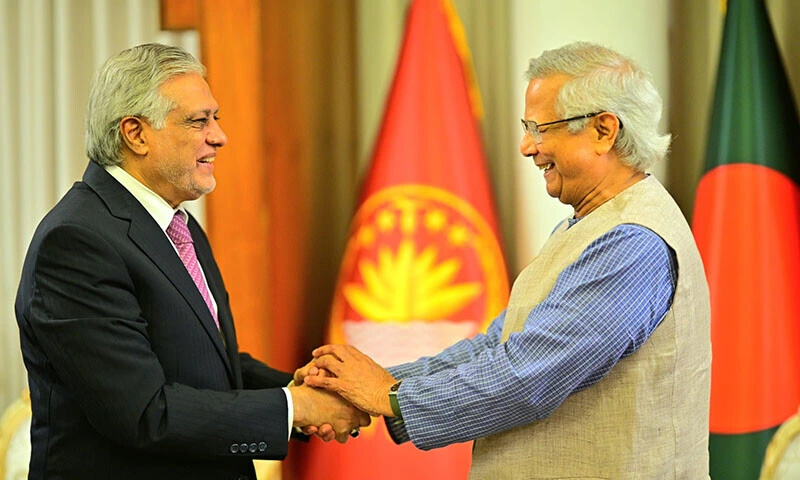
The interest of Bangladesh to revive the SAARC can be traced back from former interim government chief advisor Mohammad Yunus’s meeting with Pakistan’s foreign minister in 2025. During his meeting with Pakistan's Foreign Minister Ishaq Dar, Yunus stressed the need to strengthen not only bilateral ties but also regional cooperation with Islamabad. This meeting represents the first visit by a Pakistani foreign minister to Bangladesh in 13 years. This move can improve Bangladesh’s relationship with Pakistan, overcoming the "cold ties" stemming from historical events in 1971.
Bangladesh’s stake in the revival of SAARC is also driven by its desire to foster regional cooperation, boost economic growth, and redefine its diplomatic image in international level under the former interim government led by Nobel laureate Muhammad Yunus. By taking a leading role in mediating between India and Pakistan—the two major players whose tensions have paralysed SAARC—Bangladesh aims to position itself as a unifier and a neutral actor on the global stage.
The stakes for Bangladesh involves critical human security and geopolitical leverage, particularly regarding the protracted Rohingya refugee crisis. Bangladesh views SAARC not just as a trade bloc, but as a diplomatic spirit that has been dormant for too long. By bringing regional heavyweights like India and Pakistan to the same table, Bangladesh hopes to create a consensus-based environment where the burden of the Rohingya influx—which has strained the country's resources and social fabric—can be addressed as a collective regional challenge rather than a bilateral dispute with Myanmar. Reviving SAARC provides Bangladesh with a formal stage to enlist the diplomatic help of its neighbours to pressure the Myanmar junta. Furthermore, in an era of climate volatility, Bangladesh—one of the most climate-vulnerable nations on earth—stands to gain immensely from a revived SAARC’s potential for shared disaster management protocols and water-sharing agreements, which are life-and-death issues for its agrarian population.
According to the Bangladesh Bank’s report of latest economic engagement of Bangladesh with SAARC, if SAARC is revived, Bangladesh could expand a regional trade relationship already worth over $12 billion annually. In FY2024–25, Bangladesh exported about $1.9 billion to SAARC countries while importing roughly $10.5 billion, mainly cotton, yarn, food grains, and industrial inputs. Lower tariffs could raise exports of garments and pharmaceuticals to nearby markets, especially India, which accounts for most regional trade. Improved connectivity could reduce transport costs by up to 20–30% compared to distant markets. Bangladesh could also earn revenue from transit trade, electricity exchange, and tourism across a region of nearly 1.9 billion people. Moreover, greater cooperation with SAARC countries could reduce trade barriers, simplify visa processes, facilitate better people to people contacts and most importantly revival of the SAARC would further allows the countries to have a collective and proactive voice on global forums.
Why revival of the SAARC would be difficult?
The primary challenge is the intense rivalry between India and Pakistan, which has paralysed the organisation since 2014. India’s participation crucial for any meaningful revival of SAARC given its position as the largest economy of the region. However, India’s stances has been firm that terror and talks cannot go together which has been significant roadblock to SAARC revival given Pakistan’s cross-border terrorism. The Pahalgam attack led by Pakistan terrorist group , in which 26 civilians were killed in Indian-administered Kashmir in 2025 worsened the Indo-Pak relations, and without a commitment from both state, any meaningful development of SAARC would be very difficult.
India’s growing emphasis on subregional initiatives is widely viewed as an attempt to pursue regional cooperation frameworks that do not include Pakistan. New Delhi gradually lost interest in the SAARC and shifted toward other subregional initiatives such as the Bangladesh-Bhutan-India-Nepal (BBIN) Initiative, BIMSTEC, and the Colombo Security Conclave, which includes India, Sri Lanka, and the Maldives. Unsurprisingly, Pakistan is not a part of any of these India-led groupings. Furthermore, the use of anti-Pakistan rhetoric for domestic political gain has intensified anti-Pakistan sentiment and Islamophobia within India, which in turn is shaping foreign policy in ways that hinder regional cooperation.
China’s growing presence in South Asia is a major challenge to revive SAARC. Through its Belt and Road Initiative (BRI), China has invested heavily in infrastructure such as ports, roads, and energy projects in countries e.g., the Padma Bridge Rail Link and the Payra Power Plant in Bangladesh, the Hambantota Port and the Colombo Port City project in Sri Lanka, the Trans-Himalayan connectivity project in Nepal, the China–Maldives Friendship Bridge and housing developments in Maldives, and the China–Pakistan Economic Corridor (CPEC) including the Gwadar Port in Pakistan. These investments have increased China’s political and economic influence in the region and reduced the importance of SAARC as a platform for cooperation. China interest is building separate partnerships with South Asian countries that do not include India. The long-standing hostility between India and Pakistan has kept SAARC inactive, and China has used this situation to expand its influence by offering development assistance and investment as an alternative path for regional cooperation.
To sum up, Bangladesh has its incentives to revive SAARC – which will help to find a durable solution for the Rohingya crisis, dealing with the economic downturn, upholding its global image, and building resilience to the 21st century crisis. However, the road ahead is very uncertain and difficult. The constant tension between India and Pakistan in the Line of Control, and the recent border clashes between Pakistan and Afghanistan in Durand Line, continues to block progress of SAARC revitalisation.