

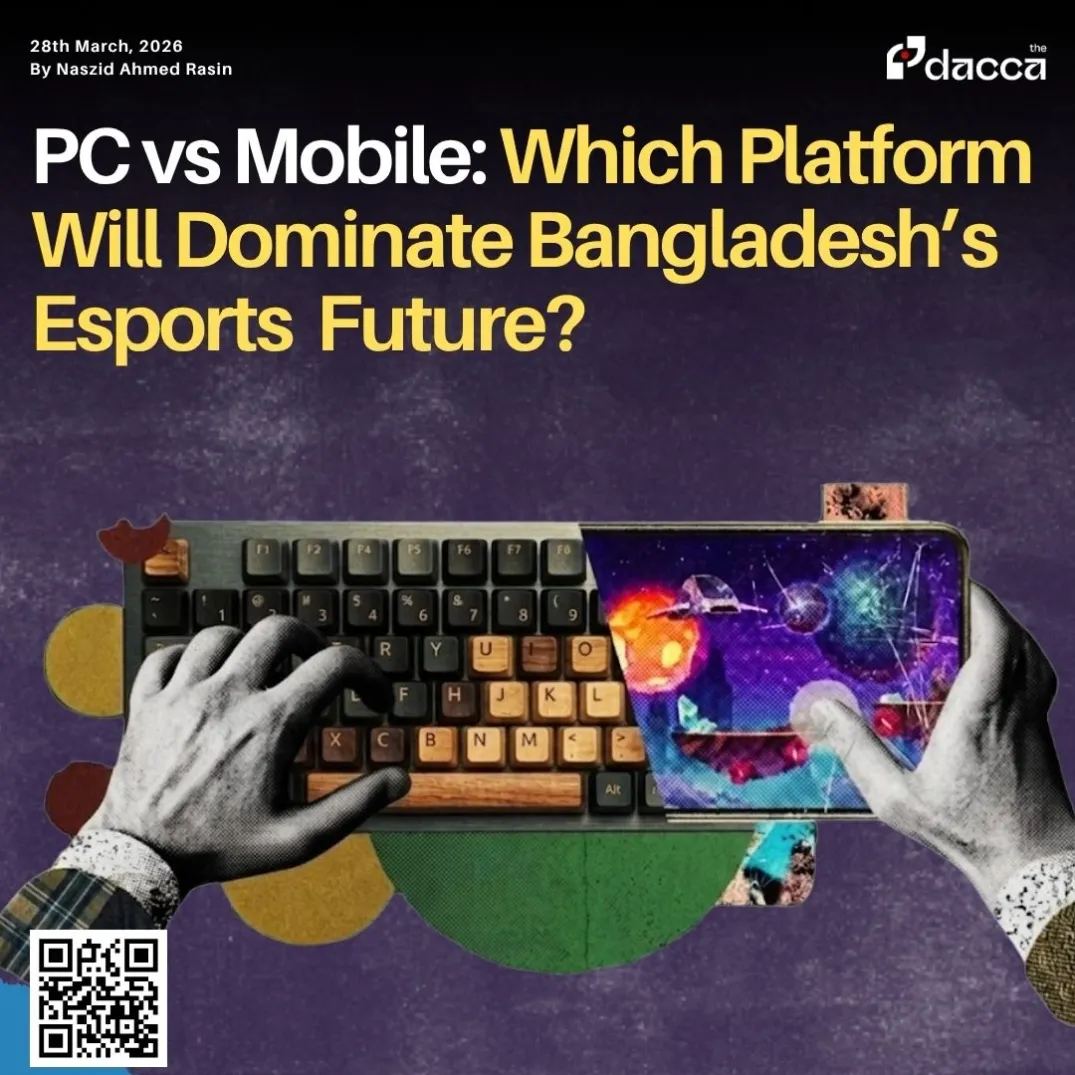
Walk into any university campus, café, or even a bus in Bangladesh and you’ll notice something striking someone, somewhere, is gaming. Not casually, but competitively. From intense PUBG Mobile squad fights to late night Valorant ranked matches, esports is no longer just entertainment, its becoming identity, ambition, even a career path. But beneath this rapid rise lies a defining question: will Bangladesh’s esports future be ruled by PCs or smartphones?
To understand the esports battle, people first need to understand Bangladesh itself. This is a country where accessibility defines trends. With a young population, around 46 million people aged between 15 and 29, digital habits are shaped largely by affordability and convenience.
Smartphones have become the gateway to gaming for this generation. In fact, more than 90% of gamers in Bangladesh primarily use mobile devices. This isn’t just a statistic; it’s a cultural shift. Gaming is no longer tied to a room, a setup, or a budget-heavy investment. It’s portable, instant, and everywhere.
Mobile esports titles like PUBG Mobile, Free Fire, and Mobile Legends dominate the competitive scene. These games are designed for accessibility quick matches, lower hardware requirements, and strong social features. As a result, mobile esports tournaments attract thousands of participants across universities, communities, and online platforms.
Even major national events reflect this trend. The PUBG Mobile National Championship Bangladesh (PMNC) 2025 saw over 17,000 participants and drew peak online viewership of around 250,000. A decent gaming smartphone in Bangladesh can cost as little as 10,000–15,000 BDT, while a competitive gaming PC setup can easily exceed 80,000–100,000 BDT. For a country where many young people are students or early in their careers, this difference is massive.
With nearly nationwide 4G coverage and low-cost data packages, mobile gaming is easier than ever. You don’t need fiber internet or high-end routers just a stable mobile connection.
Mobile gaming is inherently social. Friends can form teams instantly, play from different locations, and even stream their gameplay. For many young Bangladeshis, gaming has replaced traditional hangouts as a way to connect.
"For a country like Bangladesh, Mobile takes the higher ground than PC in term of esports scenario because it is more affordable and easier to use. "
-- Professional PUBG player "Rawnak Riasat"
In short, mobile esports fits perfectly into Bangladesh’s economic and social structure.
But writing off PC gaming would be a mistake. While mobile dominates in numbers, PC esports dominates in depth, professionalism, and global competitiveness. Titles like Valorant, Dota 2, and Counter-Strike offer higher skill ceilings, better graphics, and more structured competitive ecosystems. PC esports in Bangladesh is slowly gaining momentum. Gaming cafés and university tournaments are creating spaces for competitive PC gaming communities to grow. More importantly, global esports is still heavily PC-centric. Major international tournaments, sponsorships, and career opportunities are largely built around PC titles. This means that players aiming for global recognition often transition from mobile to PC at some point.
Now the question is, "If PC esports is so powerful, why hasn’t it taken over in Bangladesh?"
The answer lies in infrastructure. High-performance PCs are expensive, and not everyone can afford them. Even those who can often face challenges like inconsistent electricity or internet stability in some areas. Additionally, Bangladesh’s esports ecosystem still lacks structured support such as official leagues, training facilities, and sponsorship pipelines. This creates a gap: talent exists, but the system to nurture it is still developing.
One thing both platforms share is opportunity. Esports is no longer just a hobby. Globally, the industry was valued at around $2.1 billion in 2024 and is expected to grow rapidly in the coming years. In Bangladesh, young gamers are already turning their skills into income—through tournaments, streaming, and content creation. Mobile esports has opened the door for many, while PC esports offers a pathway to international recognition. This dual pathway is unique. Mobile creates access. PC creates aspiration.
So, Who Will Dominate? To find this answer The Dacca has knocked one of the most famous gaming streamer and Valorant esports player "MD Ashraful Islam Polash" aka "PiranHaaa On His Way “. He let know to The Dacca that, " Mobile will dominate the numbers, but PC will dominate the prestige."
Mobile esports will continue to grow faster in Bangladesh because it aligns perfectly with the country’s infrastructure and economy. It will remain the entry point for millions of players and the backbone of the local esports ecosystem. However, PC esports will likely define the professional ceiling. As infrastructure improves and investments increase, more players will transition to PC for higher-level competition.