

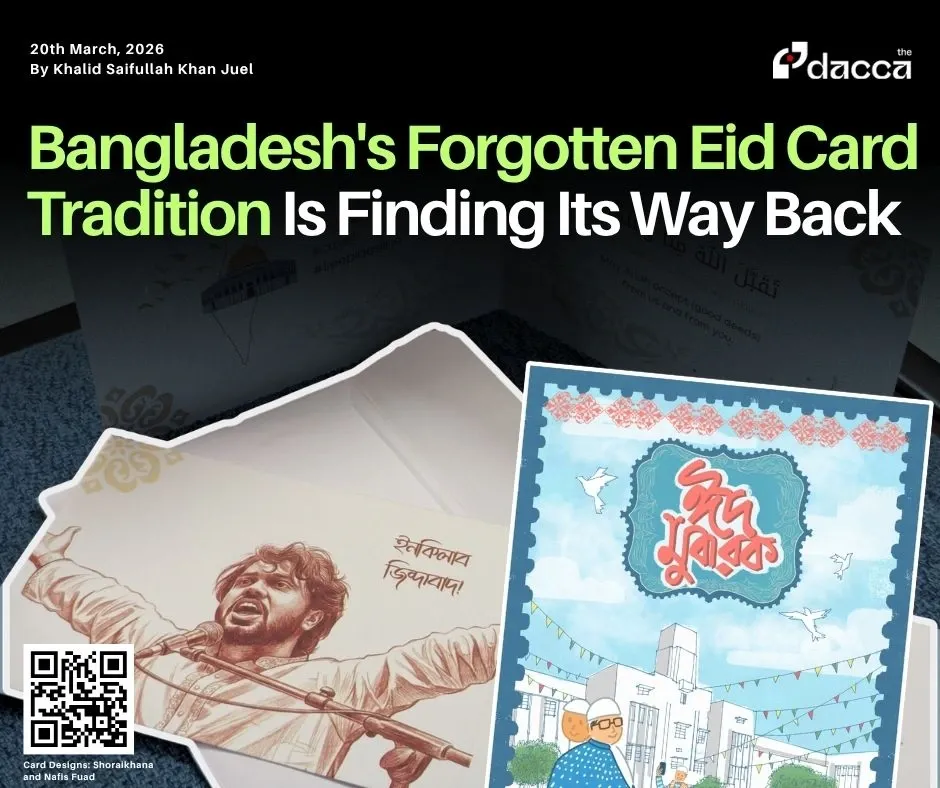
There have been millions of little changes over the decades surrounding our country’s biggest festival, Eid, especially Eid-ul-Fitr. From the 2000s to even in the early 2010s, the Millennials and Generation Z had enjoyed a fair share of their Eid holidays with Eid cards. Everyone used to pick cards depending on the person they’re thinking about, and write something meaningful to wish Eid. In front of schools, colleges, universities, and even in train stations or bus stands, the 15 prior days of Eid used to fill up with small stalls showcasing these cards.
Over the years, this tradition has been going almost extinct thanks to the rise and shine of technology. Many people now think these are unnecessary and exaggerated due to having access to digital cards that cost no money, leading to fewer sales of physical cards. Even leading card production companies like Azad or Ideal Products rarely keep them in stock. However, Generation Z now feels nostalgic again and is trying to revive the physical Eid card culture.
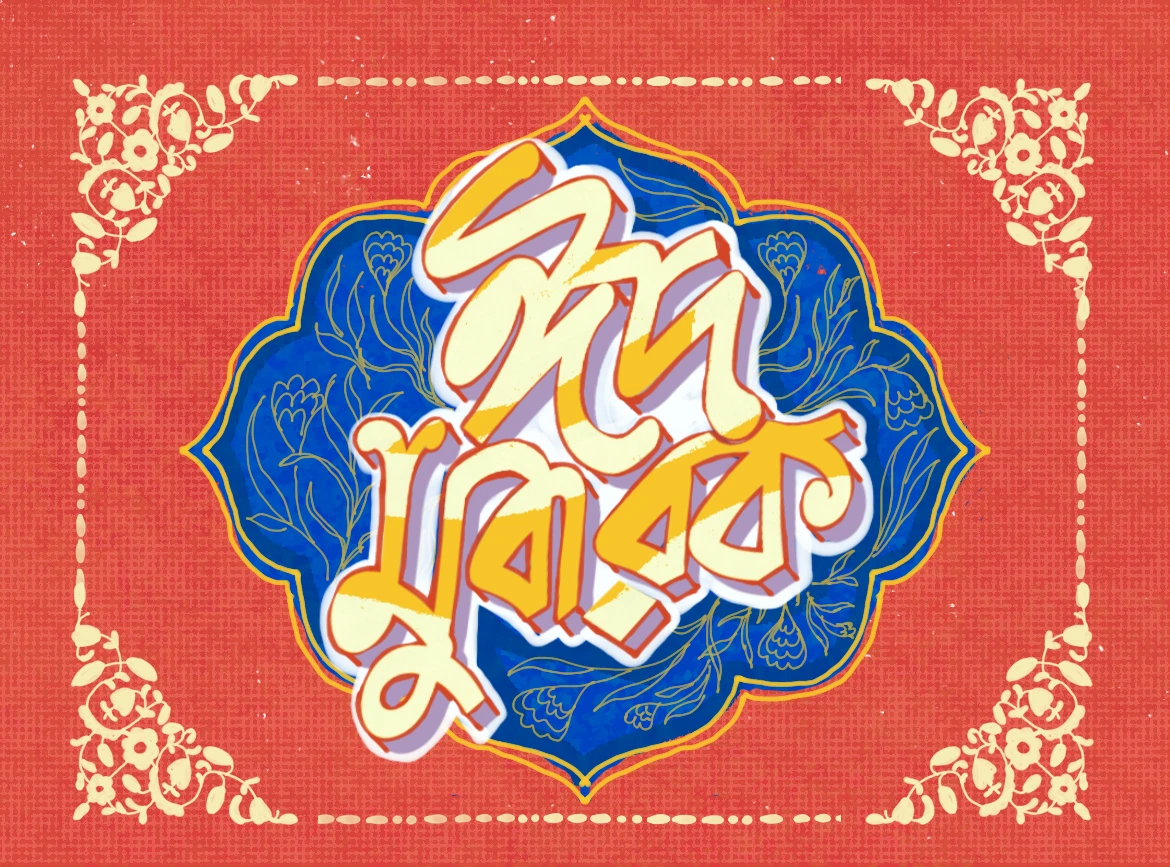
Nafis Fuad, cartoonist of Cartoonery and a student of RUET, has recently been designing Eid cards. He said, “It started when my friend Abdullah Al Mujahid from Dhaka Medical College shared an idea about distributing Eid cards on his campus, and I designed one for that purpose. When I later shared it on social media, people from other campuses also showed strong interest. After that, I ended up designing more for them as well.”
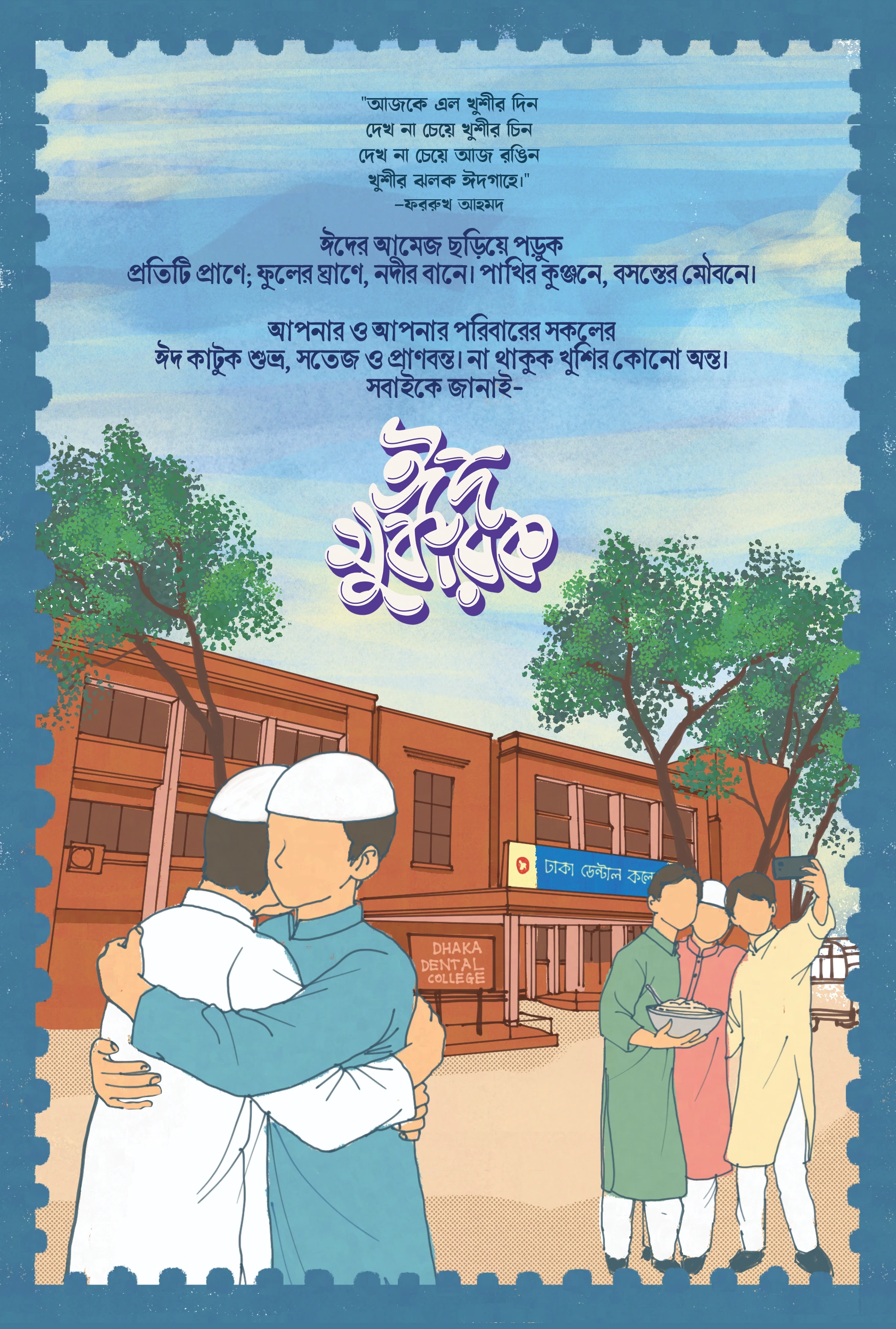
Nafis Fuad's Eid Card Design
After Nafis designs cards, those who receive them handle the printing and distribution. When asked if public interest has risen, he said, “From what I have seen, public interest is growing very quickly. Eid cards were something I saw in my childhood. Then the trend faded for a while, and now it seems to be reviving again. It is really overwhelming to see so many people connecting with that nostalgia.”
“I believe Eid card culture should definitely be revived. It is not only about nostalgia- it is still relevant today because it offers a more personal, heartfelt, and meaningful way to greet people and celebrate Eid. In my designs, I try to bring back the old aesthetics- the graphic elements, colors, textures, and pastel artwork- so that the emotional warmth of traditional Eid cards can be felt again,” said Nafis about what he thinks about reviving the culture.
Salvin Morshed from ‘Shoraikhana’ said that they have been publishing Eid cards for the past three years. He said, “It started when one of my old teachers asked me to make some Eid cards for his students. Then I thought of doing it on a larger scale and selling through Shoraikhana, and we can try to revive it.”
When asked if the people have been growing interested in printed Eid cards, he said, “We had received a good amount of response in our first year, 2024. Back then, we created the cards mostly with the theme of Palestine. Then in 2025, our cards included both July and Palestine as themes, and this time, the public interest had risen. This year, we included themes regarding Hadi bhai as well.”
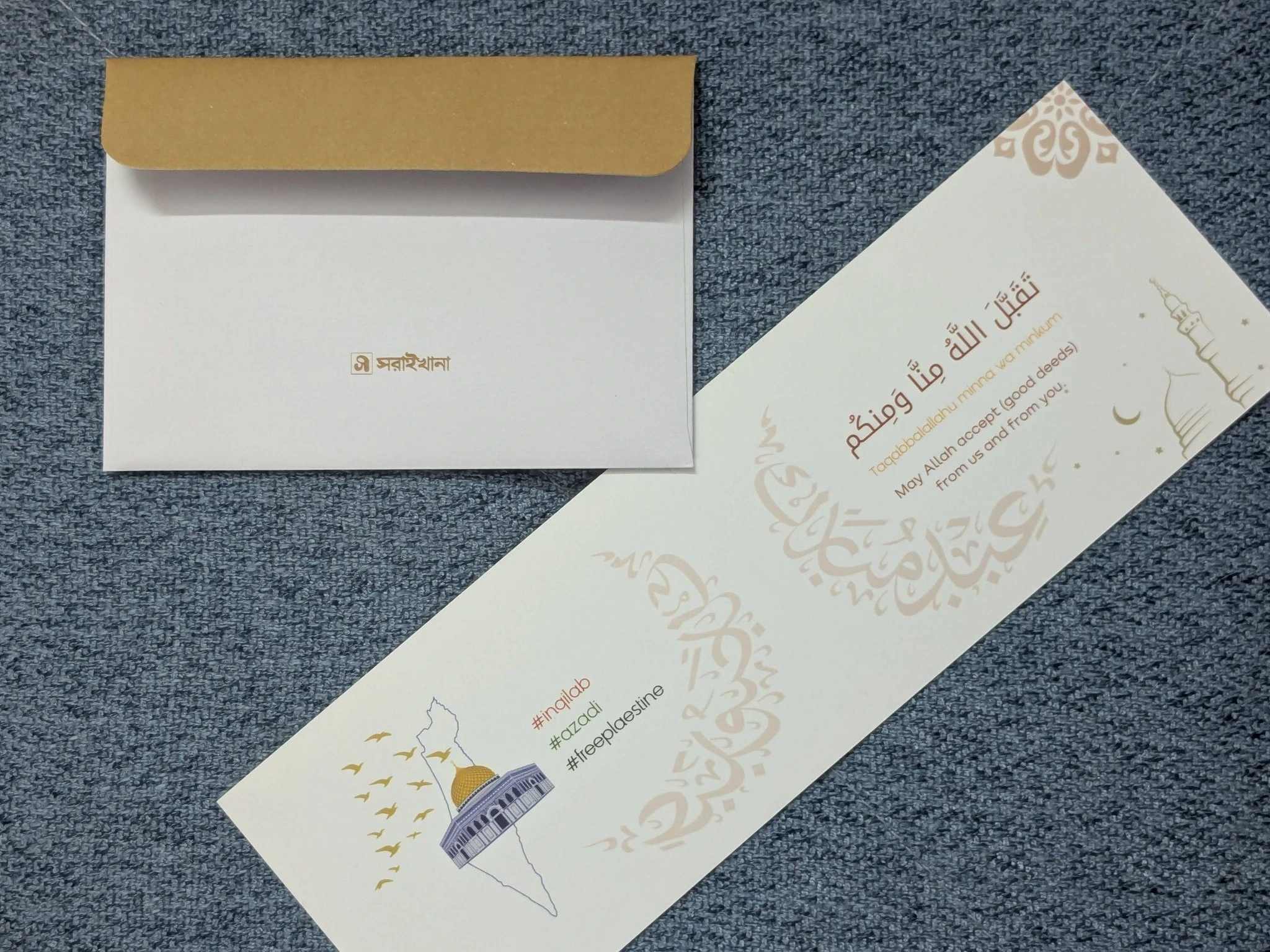
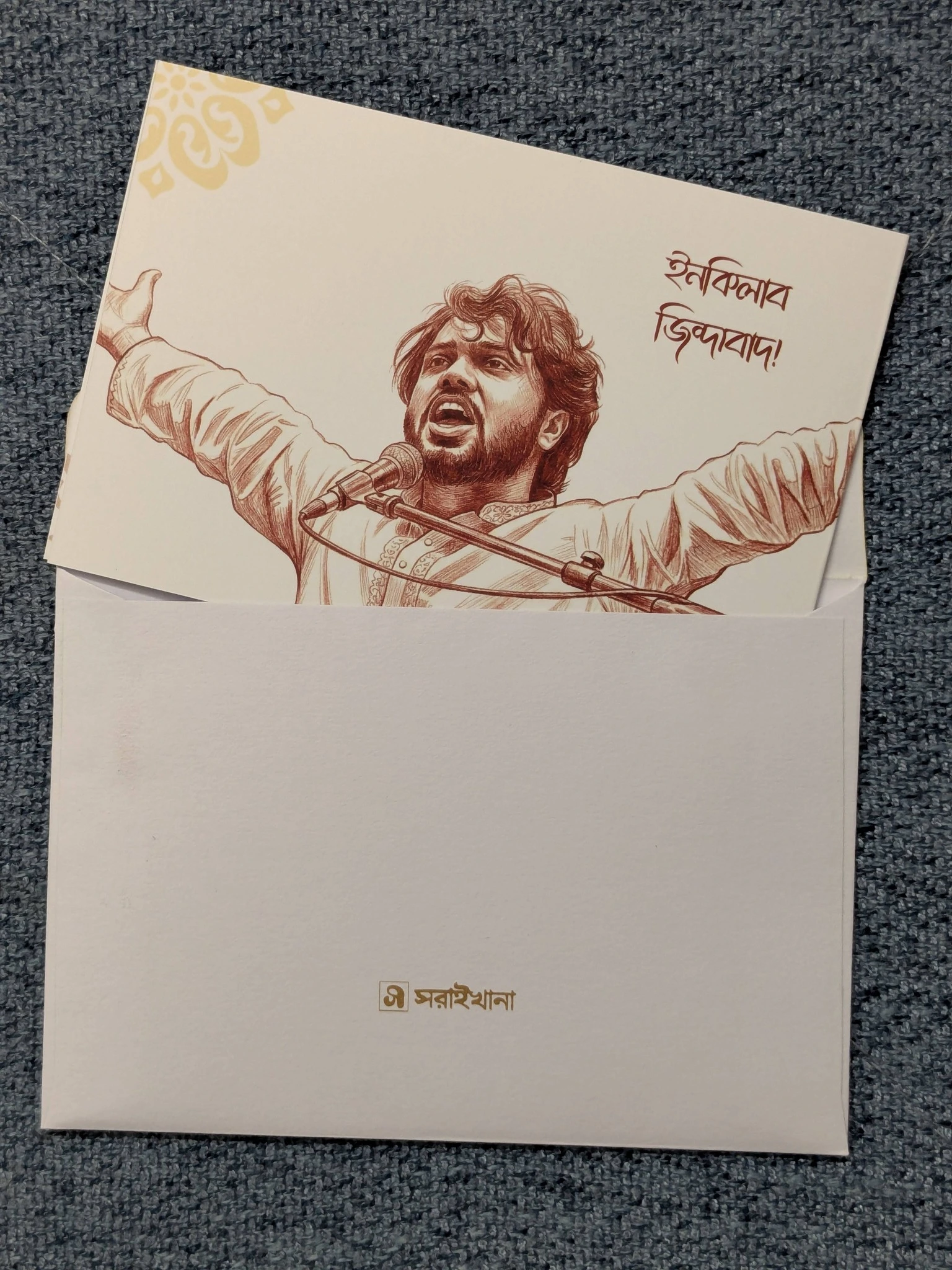
Shoraikhana Eid card Designs
Notre Dame College’s Biology lecturer, Abul Bashar, has also taken an interest in Eid cards for his students and ordered “Sharif Osman Hadi” themed Eid cards from Shoraikhana. Apart from him, the growing interest in Eid cards in July, Sharif Osman Hadi, Palestine, draws a clear picture: Eid cards are not only a cultural heritage now; they have intertwined with politics as well. This makes it even more evident why reviving the ‘physical Eid card’ culture is being discussed everywhere.
People everywhere are interested in reviving the culture. Another talk with art-enthusiast Muntasir Bin Islam makes it clearer. Muntasir usually posts art and designs on his page, Moinmeow, and has been designing and selling Eid Cards since last year. He added more designs this year to sell them on a larger scale. He said, “I have received great public interest and appreciation from people. This reminded them of the good old days.”
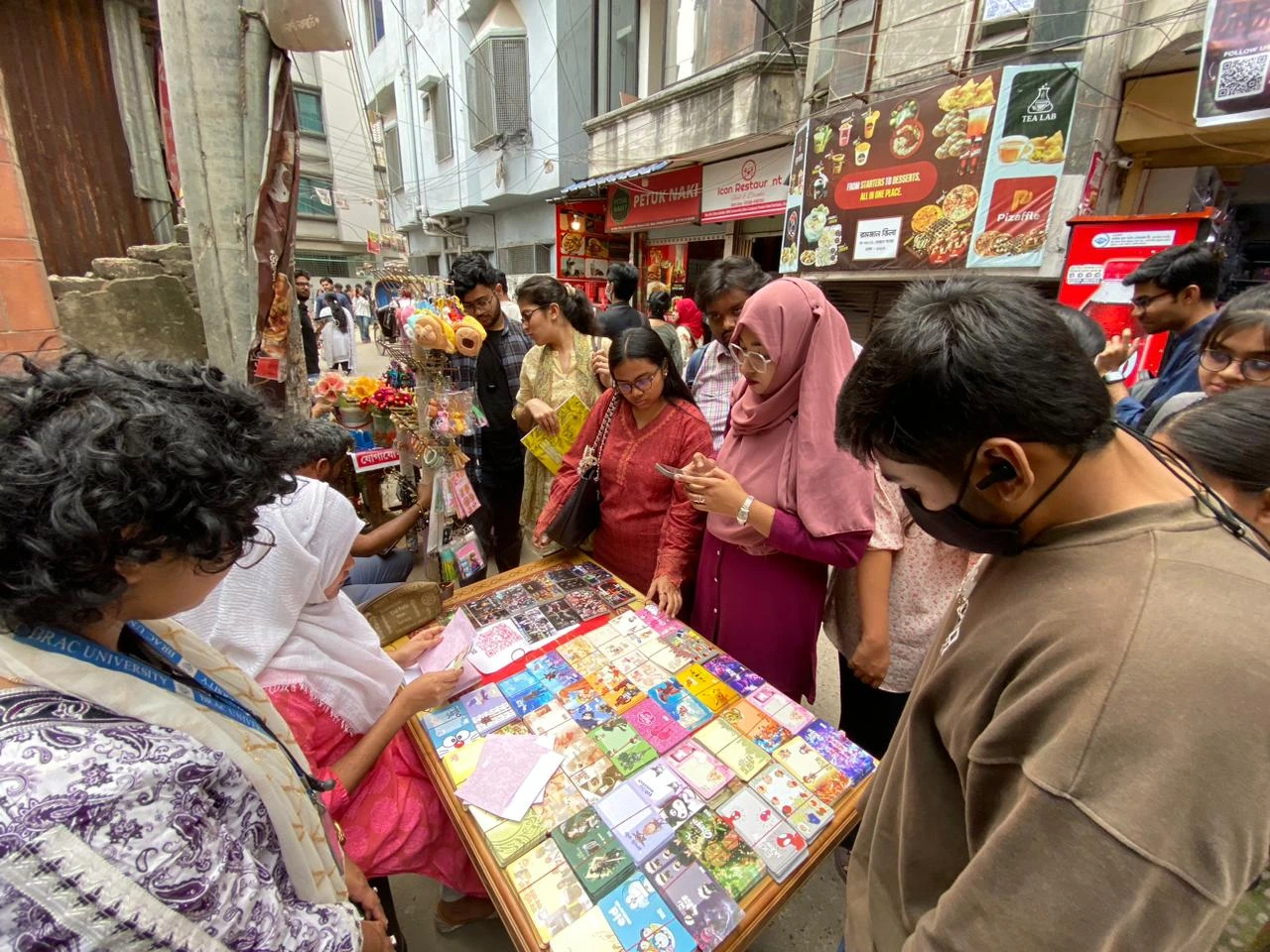
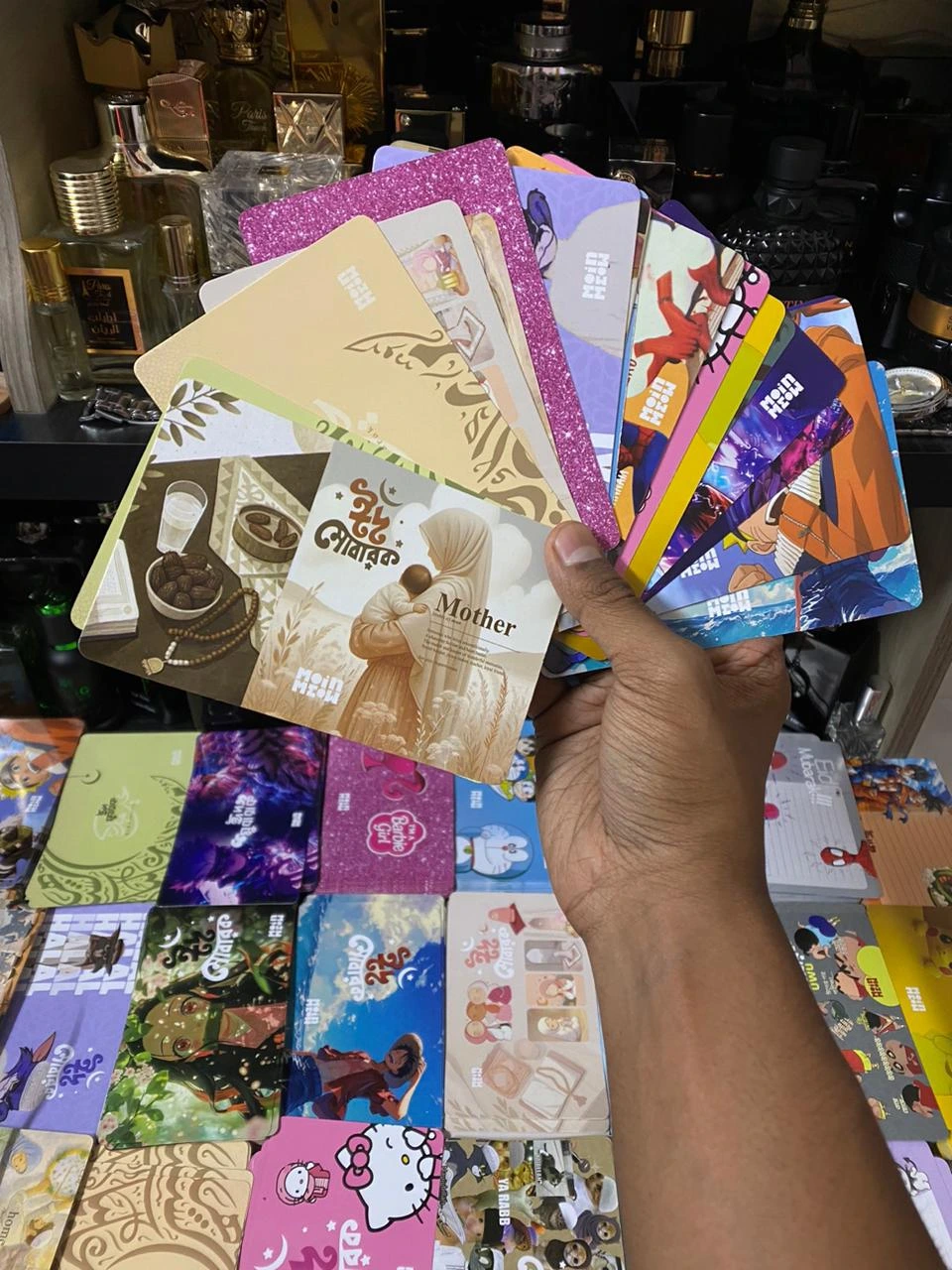
Moinmeow's Eid card stall and collection
From the growing responses that the different initiatives are receiving, a clear scenario stands: although it might seem like people moved on from the 2000s-2010s culture and hopped on the train of technology and digital cards, this isn’t the whole picture. A big reason is that most younger people can’t find any stalls to buy Eid cards anymore. An undergraduate student at DU, Homayra Mahzabin Ankita said, “I still cherish the memory of Eid cards from my childhood, but nowadays I don’t find any most of the time. That’s why I sometimes use cards from bKash and other online facilities.”
Eid Cards have always been a part of the Bangladeshi Eid culture, even if the physical cards are rare now. Most importantly, from the different conversations, it is clear that Generation Z is willing to revive the physical card once again. Even if the physical cards aren’t available on a mass scale by any big corporation, and a lot of young people like Homayra Mahzabin miss them, Gen-Z is starting to take things into their own hands to produce these cards personally.